High Availability: Introduction
CommunityEnterpriseBacula provides multiple approaches to achieving High Availability (HA) across its core components. These approaches range from straightforward, manually managed redundancy to fully automated, highly resilient architectures capable of limiting service interruption to only a few seconds.
Each method involves different levels of operational complexity, automation, and cost. Simpler options may be easier to deploy but typically rely on manual intervention or offer limited failover speed. More advanced architectures involve clustering, shared-nothing replication, or orchestrated failover, and may require deeper expertise and additional infrastructure. Your HA design should be guided by your business continuity requirements, Recovery Time Objective (RTO), and operational maturity.
The HA strategies discussed in this document focus on:
Linux-based systems for Bacula Directors and Storage Daemons
PostgreSQL for the Catalog
These technologies are widely used in enterprise environments and align well with established HA patterns such as active/passive clusters, active/active replication, shared storage architectures, and quorum-based failover systems. If you are not already familiar with these technologies, plan for time and training investment. Advanced HA solutions are powerful but requires careful configuration and ongoing operational discipline.
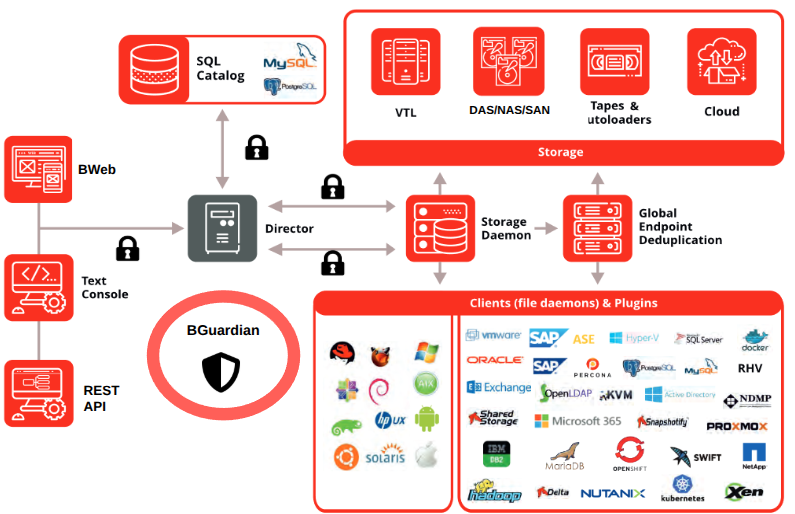
Bacula Components
See also
Next articles:
Go back to: High Availability.